El Niño Is Here: A Builder’s Storm Checklist for Bay Area Homeowners
This week’s storm was a preview of an El Niño winter. A builder’s checklist to protect your Bay Area home’s roof, drainage, foundation and pool.

November 20, 2026 · 4 min read
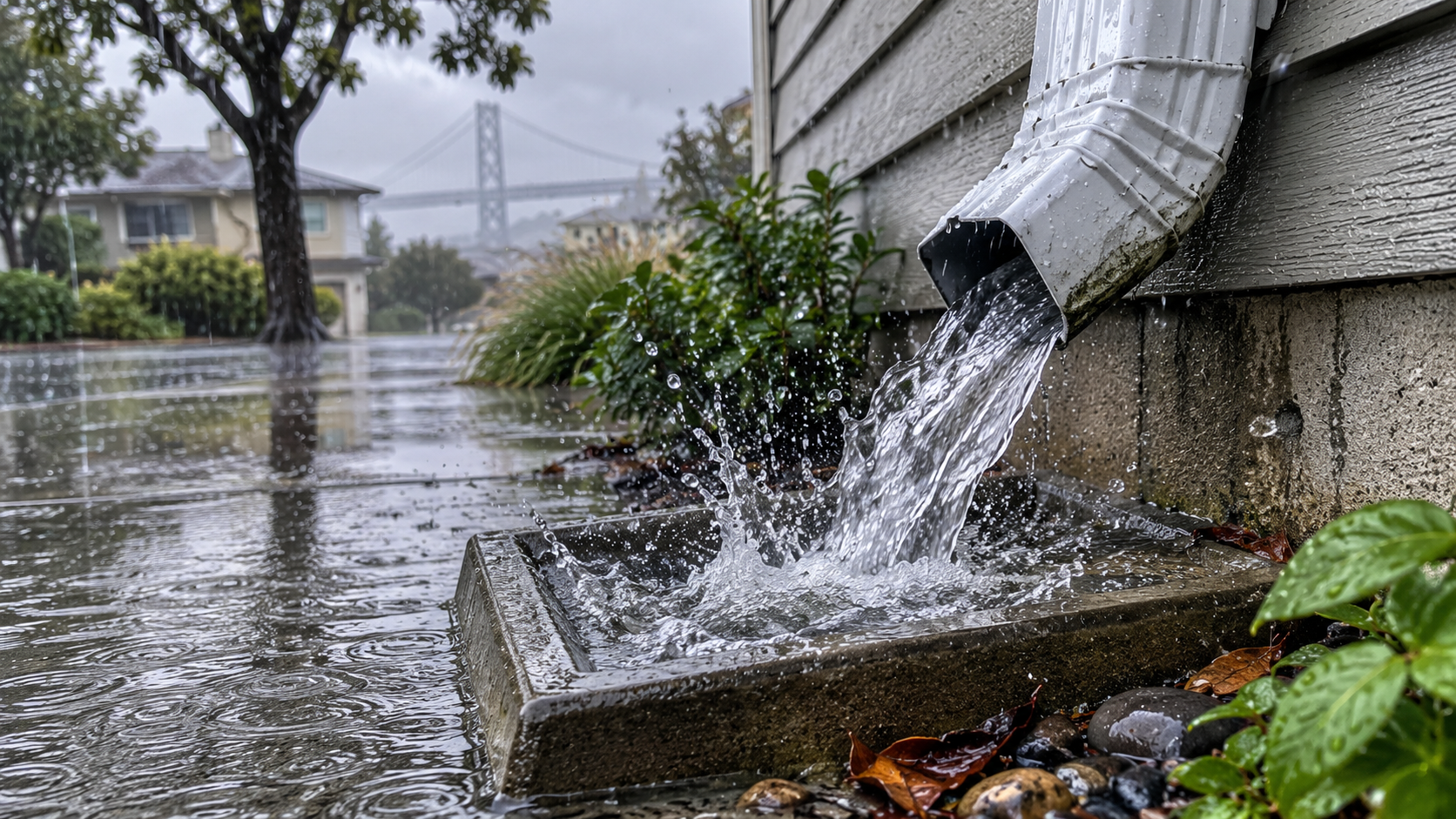
If Wednesday's storm caught your house off guard, you weren't alone. San Francisco recorded 2.28 inches of rain by 3 p.m. on November 18, the most for that date since 1918, according to the National Weather Service as reported by The San Francisco Standard. That's close to the city's whole November average of 2.6 inches, in a single day.
And it may only be the start. In October, climate scientist Daniel Swain told KQED he has 90% to 95% confidence that California will see a wetter-than-average winter, with the biggest spike most likely in January and February.
Before real estate, I spent years in residential construction and pool building. Storms like this one don't usually create new problems in a house. They find the ones that were already there. Here's what I'd check now, while there's a break in the weather.
Start at the top: roof, gutters and downspouts
Most water damage I've seen started with water that wasn't sent far enough from the house.
- Clean gutters after the leaves drop, not before. November leaf fall can refill a gutter you cleaned in October.
- Follow every downspout to where it ends. If it dumps right against the foundation, add an extension or splash block so water travels well away from the house.
- Look at the roof from the ground with binoculars. Missing or lifted shingles, cracked tiles and loose flashing around chimneys and vents are the usual leak points.
- Check the attic after a storm. Use a flashlight and look for damp sheathing, stained insulation or drips at roof penetrations. Catching a stain now costs far less than catching a ceiling later.
Ground level: grading, drains and the crawlspace
Water that sits next to a foundation eventually finds a way in, whether through a crawlspace, a slab edge or a basement wall.
- Check the slope. Soil and hardscape should drop away from the house. Planter beds built up over the years often push the grade the wrong way.
- Clear area drains and yard drains. Pour a bucket of water in and watch whether it actually drains.
- Look in the crawlspace. Standing water, wet soil or a musty smell after a storm are worth taking seriously. In older Bay Area homes, I also look for efflorescence (white mineral crust) on foundation walls, which means water has been moving through.
- Test the sump pump if you have one. Fill the pit until the float rises and confirm the pump kicks on and discharges away from the house.
- Check retaining walls. Weep holes should be open. A wall that bulges or leans after heavy rain needs a professional's eyes, especially on hillside lots.
Trees, power and coastal water
Saturated soil and wind are a tough combination. The NWS warned of gusts up to 70 mph in the East Bay hills during this storm, and PG&E outages hit thousands of customers, including about 3,625 in the Oakland hills and 5,602 near Lake Merritt, per The San Francisco Standard.
- Have large trees near the house looked at by a certified arborist, particularly limbs over the roof, driveway or power lines.
- Plan for outages: flashlights, a charged battery bank, and a way to open the garage door manually.
- Watch the tides if you're near the shoreline. Swain flagged king tides during Thanksgiving week and around Christmas as a flooding concern this winter, especially if they line up with a storm.
A builder's note on pools
My pool-building background makes this one personal. Don't drain your pool during the rainy season to "make room" for rain. When the ground around it is saturated, groundwater pushes up on the shell. An empty or low pool can shift or even lift out of the ground. Let the overflow or skimmer handle excess water, keep the deck drains clear, and if the level climbs too high, lower it only slightly and only with the pump's waste setting.
After a big storm, also check that the equipment pad didn't flood. Pumps and heaters sitting in water should be inspected before you run them.
Insurance and paperwork: do this on a dry day
- Flood is usually a separate policy. FEMA notes that most homeowners insurance does not cover flood damage, and that one inch of floodwater can cause up to $25,000 in damage.
- New flood policies generally take 30 days to start, according to FEMA, with limited exceptions. That's why the time to look into it is before the next storm, not during it.
- Keep records. Photos, dates and repair invoices for anything water-related are useful for insurance claims. If you plan to sell, they're also useful when filling out California's seller disclosure forms. Talk to your insurance agent and, where needed, a real estate attorney about what applies to your home.
Why this matters for your home's value
When I walk a home with buyers or prepare a listing, water history is one of the first things I look at. A dry crawlspace, working drainage and a roof with records behind it tell a buyer the house has been cared for. Water stains and unanswered questions tend to show up as lower offers or repair credits. An hour of prep this weekend protects your comfort this winter and your equity down the road.
If you're curious how your home's condition and the current market add up, the button below gives you a starting point. I'm always glad to walk a property with you and share what I see with a builder's eye.
Sources:
- The San Francisco Standard, "Storm chaos: Atmospheric river causes flooding across San Francisco," Nov. 18, 2026: https://sfstandard.com/2026/11/18/atmospheric-river-drenches-sf-bringing-flood-threat-damaging-winds/
- KQED, "California's El Niño Winter Could Be 'Profoundly Unsubtle,' Scientists Warn," Oct. 13, 2026: https://www.kqed.org/news/12104145/californias-el-nino-winter-could-be-profoundly-unsubtle-scientists-warn
- FEMA, Flood Insurance: https://www.fema.gov/flood-insurance